


Responsible gambling tools work best when they are chosen before play becomes stressful. For readers comparing low deposit casinos Canada, the most useful question is not simply how much can be deposited, but how clearly spending, time and access can be managed. The online casino grizzlys quest information available to Canadian readers describes several controls, including deposit limits, session reminders, self-assessment material and self-exclusion. These tools have different purposes, so understanding their limits can help players select the right safeguard rather than relying on willpower alone.

Which control should come first?
A deposit limit is usually the most practical starting point for someone who wants to keep gambling within a fixed entertainment budget. The available account controls are described as supporting daily, weekly and monthly limits. A player can decide on an amount in advance and use that ceiling to separate gambling money from rent, food, transport, savings and other essential spending. The important decision is made before a deposit request creates pressure.
Session reminders address a different risk: losing track of time. A reminder does not necessarily prevent continued play, but it interrupts automatic behaviour and creates a moment to assess whether continuing still fits the original plan. This is particularly useful during long sessions, when repeated small wagers can make total spending harder to notice. Players should treat the reminder as a prompt to pause, not as proof that play remains affordable.
Self-assessment information can help identify patterns that are easy to dismiss, such as chasing losses, hiding gambling from others, borrowing to continue or feeling unusually irritated when stopping. It is not a diagnosis and cannot replace professional advice. However, answering questions honestly can show whether a deposit limit is enough or whether stronger steps, such as a break or exclusion request, would be more appropriate.
How to set a limit that can actually hold
A useful limit starts with money that can genuinely be lost without affecting ordinary obligations. Instead of choosing an amount because it is the platform minimum or because a promotion requires it, review a realistic entertainment budget for the week or month. If the amount would need to be replaced from a credit card, overdraft or household funds, it is too high. A low deposit does not automatically mean low total spending.

Before setting the control, decide whether the chosen period makes sense. A daily limit may suit someone who plays rarely and wants close oversight, while a monthly limit may be easier for someone who already budgets several forms of entertainment together. Avoid setting several overlapping limits without understanding how they interact. Check the account’s displayed terms to confirm when a limit takes effect, whether changes are immediate and whether reductions differ from increases.
Keep a separate personal record of deposits and gambling time rather than relying only on memory. A simple note can include the date, amount, session length and reason for playing. Reviewing it once a week may reveal that frequent small deposits exceed the intended budget. If the account controls do not behave as expected, stop depositing and contact support through the available help channels. Do not assume a pending request has already taken effect.
When a pause is safer than a smaller deposit
A smaller deposit is not always a meaningful safeguard. If a player repeatedly returns after losing, increases stakes to recover money or opens another account to bypass a limit, the central issue is no longer the size of one transaction. Continuing to reduce individual deposits can create a false sense of control while the overall pattern becomes more costly.
Self-exclusion is designed for a stronger interruption. The available information indicates that exclusion requests and some other responsible-gambling controls may require contact with support. Before making a request, read the stated process carefully and save any confirmation. Ask what access is restricted, how long the exclusion lasts and whether promotional messages or account communications are also affected. Do not rely on a verbal promise when the operator provides a formal confirmation method.
During a break, remove saved payment details where possible, unsubscribe from gambling marketing and avoid replacing one account with another. Tell a trusted person what you have decided if that would make the plan easier to maintain. Anyone worried about gambling can also consult Canada’s responsible gambling information and support resources. If gambling is connected with severe distress, debt or thoughts of self-harm, seek urgent help from local health or crisis services rather than waiting for an account feature to solve the problem.
What account controls cannot prevent
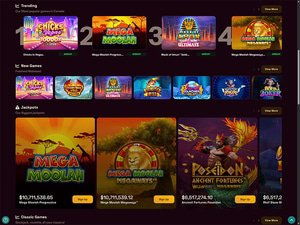
Deposit limits generally address money entering one account. They may not measure cash held elsewhere, spending on another operator or funds borrowed from another person. A player using several gambling accounts can therefore underestimate total exposure. For a fuller picture, combine the platform setting with a personal monthly budget covering every gambling source, including lottery products, sports betting, in-person venues and informal wagers.
Session reminders also have a narrow function. They can interrupt play, but they do not guarantee that a person will stop. Notifications may be ignored, delayed or missed if a device is muted. Similarly, a self-assessment questionnaire can raise useful concerns without changing behaviour by itself. These tools are prompts and barriers, not substitutes for a decision to pause or seek support.
Promotions can make control more complicated. A bonus may encourage extra deposits, extend a session or make losses feel temporarily offset. Before accepting an offer, consider whether its conditions would make it harder to stop. If a player has already decided to reduce or suspend gambling, declining promotions is usually clearer than trying to meet an offer while maintaining strict limits. Check the account’s responsible-gambling and promotional settings rather than assuming every marketing message can be blocked automatically.
A simple routine for safer account use
Use a short routine before every deposit. Confirm the available entertainment budget, check whether the proposed amount fits it and identify the time available for play. Do not deposit while angry, tired, intoxicated, bored or trying to recover an earlier loss. If the reason for depositing is emotional rather than recreational, take a break and choose a non-gambling activity instead.
During play, keep the session reminder active and stop when the planned time ends. Never treat a win as permission to extend the session indefinitely or a loss as a reason to raise the stake. Afterward, record the result without judging yourself. The purpose is to compare real behaviour with the plan, not to create another pressure point.
Review the arrangement at a fixed interval, such as once a month. Ask whether deposits stayed within budget, whether sessions lasted longer than intended and whether gambling affected sleep, work, relationships or bills. If the answer is yes, strengthen the response: lower the limit, request a break, use self-exclusion or speak with a qualified support service. Limits are most effective when reviewed honestly and adjusted before a problem becomes a crisis.
Responsible gambling questions
Are low deposit casinos automatically safer?
No. A low minimum only limits the size of one transaction. It does not cap the number of deposits, the time spent playing or spending across different accounts. Safety depends more on clear personal budgeting, account limits, regular monitoring and the willingness to stop when gambling no longer feels recreational.
Can a session reminder stop gambling automatically?
Not necessarily. A reminder is intended to interrupt a session and encourage a decision, but it may not block further play. Read the operator’s current description to understand what the feature does. If reminders are repeatedly ignored, use a stronger control such as a break or self-exclusion.
What should someone do if limits are not enough?
Stop depositing and contact the available support channel to ask about stronger restrictions, including self-exclusion. Remove convenient payment access and tell a trusted person. Independent Canadian gambling-support resources can provide confidential guidance. If gambling is causing immediate financial or emotional danger, seek urgent professional help rather than continuing to manage it alone.